How Keyword Research Helps Small Businesses Grow Online
Keyword research helps businesses understand what customers search for, create useful content, improve website visibility, and build a stronger SEO foundation. It's the first step to attracting the right visitors and turning them into loyal customers.
What Is Keyword Research for Small Businesses?
Keyword research is the process of finding and analyzing the words and phrases people use when searching online for products, services, information, or solutions.
For small businesses, keyword research helps identify what customers are searching for, which topics have business value, how competitors attract visitors, and what content opportunities exist.
Discover what your audience actually types
See which keywords drive traffic to competitors
Create pages that match real user needs
Example: A local bakery should not only target "bakery". Customers may search "custom birthday cakes near me", "wedding cake bakery", or "same day cake delivery" – these keywords show stronger intent.
Why Small Businesses Need a Strong Keyword Research Strategy
Reach The Right Customers
Target people actively searching for your solutions.
Create Better Content
Understand what topics customers actually care about.
Reduce Marketing Waste
Avoid creating content around low-value keywords.
Build Long-Term SEO Growth
Creates a stronger foundation for sustainable visibility.
Understanding Search Intent Behind Keywords
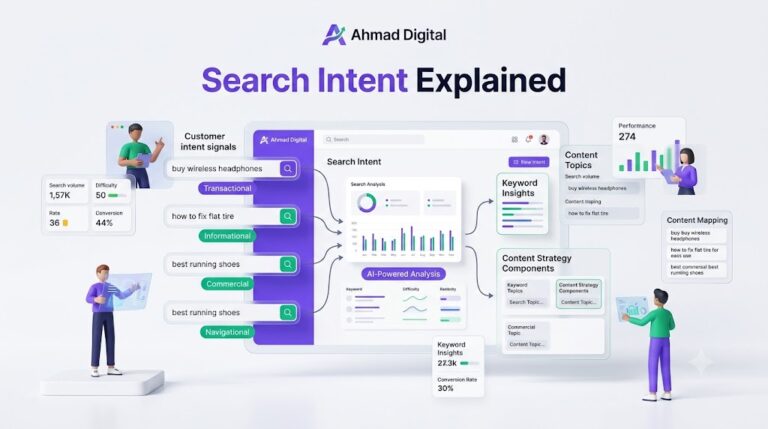
Every search has a purpose. Knowing why someone searches helps you create the right content at the right time.
Informational
Users want knowledge
"What is SEO?"
Commercial
Users compare options
"Best SEO agency for small business"
Transactional
Users ready to act
"Hire SEO services"
Navigational
Users search a brand
"Ahmad Digital SEO services"
Understanding intent helps businesses create content that matches customer needs at every stage.
Types of Keywords Small Businesses Should Target
A balanced keyword strategy includes different types of keywords to attract customers at various stages.
Local Keywords
"SEO agency near me"Attract customers in your geographic area.
Service Keywords
"WordPress development services"Describe exactly what you offer.
Long-Tail Keywords
"affordable SEO services for small businesses"Lower competition, high intent phrases.
Problem-Based Keywords
"how to improve website traffic"Address specific pain points.
Location-Based Keywords
"web developer in Pakistan"Combine service + place for relevance.
Buyer Intent Keywords
"hire SEO expert"Target ready-to-convert users.
Step-by-Step Keyword Research Process for Small Businesses
A structured keyword research process helps small businesses discover valuable search terms, understand customer needs, and create content that attracts the right audience.
Understand Business Goals
Clarify products, services, customers, and marketing objectives before researching keywords.
Ex: A fitness studio focuses on personal training & gym memberships.
Identify Customer Search Terms
Research what potential customers type — problems, questions, buying needs, service searches.
Analyze Keyword Value
Evaluate relevance, competition level, business intent, and customer value for each keyword.
Study Competitor Keywords
Discover topics competitors rank for, content gaps, and new keyword opportunities.
Create & Optimize Content
Use selected keywords naturally in website pages, blog posts, service pages, and FAQs.
How to Find the Right Keywords for Your Business Website
The right keyword is not always the keyword with the highest search volume. Businesses should select keywords that match customer needs and business goals.
- Relevant to business products or services
- Matches real customer search intent
- Has realistic competition level for small business
- Supports clear business goals
Relevance
Matches your products/servicesSearch Intent
What users actually wantCompetition Level
Realistic opportunitiesCustomer Value
Attracts potential customersExample: Instead of targeting "shoes", a local shoe store may target "comfortable running shoes for beginners" — clearer customer intent.
Common Keyword Research Mistakes Small Businesses Should Avoid
Many small businesses make avoidable keyword research errors that limit their search visibility. Recognizing these mistakes helps build a stronger SEO strategy.
Keyword Research Tools and Resources for Better SEO Decisions
Tools help businesses collect data, but strategic interpretation is necessary to select useful keywords. The right resources make keyword discovery faster and more informed.
Search Data Tools
Understand keyword demand, trends, and search volume patterns.
Competitor Research Tools
Discover content opportunities and competitor keyword strategies.
Website Analytics Tools
Measure keyword performance and visitor behavior on your site.
Search Console Data
See exactly how users discover your website through search.
Content Research Tools
Find topic ideas, questions, and content gaps in your industry.
SEO Audit Tools
Identify optimization opportunities and technical improvements.
How Keyword Research Supports Content Marketing and SEO
Keyword research is the foundation that connects content marketing with SEO growth. Well-researched keywords inform every piece of content, helping businesses attract the right audience and build lasting search visibility.
Keyword Research
Discover what customers search for, identify valuable topics, and understand search intent.
Content Strategy
Create pages, blog posts, and resources that answer real customer questions using targeted keywords.
SEO Growth
Improved rankings, better user experience, and stronger search engine understanding of your website.
Better Website Content
Create pages that answer real customer questions with the right keywords.
Stronger Blog Strategy
Keyword insights help identify valuable topics.
Ex: "Digital Marketing Strategies For Small Businesses"
Improved User Experience
Visitors find information that matches their needs quickly and easily.
How Keyword Research Helps Small Businesses Grow Online
Keyword research helps businesses understand what customers search for, create useful content, improve website visibility, and build a stronger SEO foundation. It's the first step to attracting the right visitors and turning them into loyal customers.
What Is Keyword Research for Small Businesses?
Keyword research is the process of finding and analyzing the words and phrases people use when searching online for products, services, information, or solutions.
For small businesses, keyword research helps identify what customers are searching for, which topics have business value, how competitors attract visitors, and what content opportunities exist.
Discover what your audience actually types
See which keywords drive traffic to competitors
Create pages that match real user needs
Example: A local bakery should not only target "bakery". Customers may search "custom birthday cakes near me", "wedding cake bakery", or "same day cake delivery" – these keywords show stronger intent.
Why Small Businesses Need a Strong Keyword Research Strategy
Reach The Right Customers
Target people actively searching for your solutions.
Create Better Content
Understand what topics customers actually care about.
Reduce Marketing Waste
Avoid creating content around low-value keywords.
Build Long-Term SEO Growth
Creates a stronger foundation for sustainable visibility.
Understanding Search Intent Behind Keywords
Every search has a purpose. Knowing why someone searches helps you create the right content at the right time.
Informational
Users want knowledge
"What is SEO?"
Commercial
Users compare options
"Best SEO agency for small business"
Transactional
Users ready to act
"Hire SEO services"
Navigational
Users search a brand
"Ahmad Digital SEO services"
Understanding intent helps businesses create content that matches customer needs at every stage.
Types of Keywords Small Businesses Should Target
A balanced keyword strategy includes different types of keywords to attract customers at various stages.
Local Keywords
"SEO agency near me"Attract customers in your geographic area.
Service Keywords
"WordPress development services"Describe exactly what you offer.
Long-Tail Keywords
"affordable SEO services for small businesses"Lower competition, high intent phrases.
Problem-Based Keywords
"how to improve website traffic"Address specific pain points.
Location-Based Keywords
"web developer in Pakistan"Combine service + place for relevance.
Buyer Intent Keywords
"hire SEO expert"Target ready-to-convert users.
Measuring Keyword Performance & Improving Your Strategy
Keyword research is not a one-time task. Businesses should regularly monitor performance and adjust their strategy based on real search data.
Keyword Rankings
Track how pages perform for targeted keywords over time and identify upward or downward trends.
Traffic Insights
Understand whether keyword optimization is bringing relevant organic visitors to your website.
User Engagement
Improve titles and descriptions when users see pages in search results but do not click through.
Conversion Tracking
Measure whether visitors complete valuable actions such as contact forms, service inquiries, or purchases.
Keyword Research Best Practices for Long-Term Growth
Build a sustainable keyword research strategy with these proven approaches.
Focus On User Intent
Choose keywords based on what customers need, not only search volume. Relevance drives results.
Create Topic Clusters
Build related content around important business topics to establish authority and depth.
Update Existing Content
Refresh pages when customer needs and search trends change. Fresh content ranks better.
Target Specific Keywords
Long-tail keywords often attract more qualified visitors ready to take action.
Balance Competition & Opportunity
Choose keywords where your business can realistically compete and win visibility.
Use Keywords Naturally
Write for people first while helping search engines understand your content structure.
How Ahmad Digital Helps Businesses Build Effective SEO Strategies
Ahmad Digital helps businesses create SEO strategies based on research, technical improvements, content planning, and user experience.
Business Understanding
Analyze goals, audience, and market to identify the right SEO opportunities.
Keyword Research
Identify valuable search opportunities that align with your business objectives.
Learn about SEO services →SEO Optimization
Improve website structure, content, and technical performance for better rankings.
Content Strategy
Create helpful pages and resources that match user intent and search demand.
Explore technical SEO →Continuous Improvement
Monitor performance and improve based on real data and changing search behavior.
Frequently Asked Questions About Keyword Research
What is keyword research in SEO?
Why is keyword research important for small businesses?
Should small businesses target high-volume keywords?
How often should businesses update keyword research?
Can keyword research improve website traffic?
Does Ahmad Digital provide keyword research services?
Building a Smarter SEO Strategy With Keyword Research
Keyword research gives businesses a clearer understanding of customer searches, content opportunities, and SEO direction. A strong keyword strategy helps businesses create useful content, reach relevant audiences, improve website visibility, and build a stronger digital presence.
SEO requires consistent improvement, quality content, and user-focused strategies. Start building your keyword foundation today.
Start Your SEO